 Bangkok Community BJJ
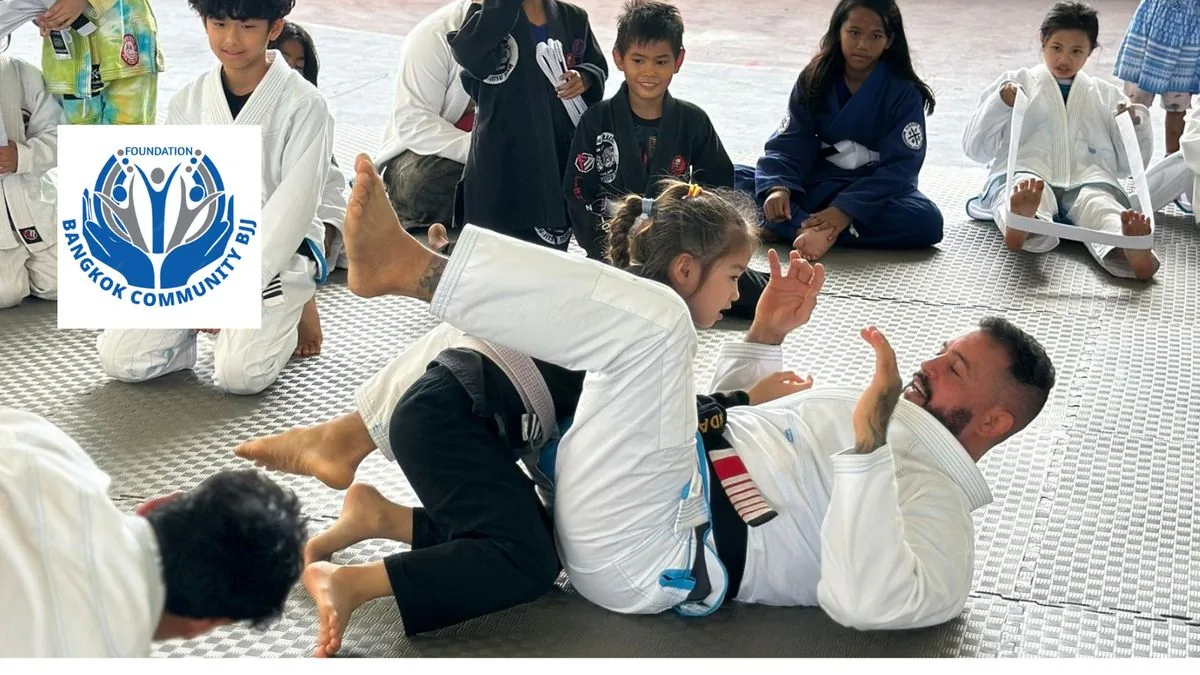
What is Brazilian Jiu-Jitsu?
A grappling-based martial art where technique and leverage beat size and strength.
Brazilian Jiu-Jitsu (BJJ) is a grappling-based martial art that focuses on technique, leverage and positional control to overcome opponents, regardless of size or strength. It emphasizes ground fighting, submissions and positional dominance, making it an effective form of self-defense and a key discipline in mixed martial arts (MMA).
BJJ is widely practiced for self-defense, fitness and as a sport, offering benefits that extend to both body and mind. Known for its effectiveness in MMA and self-defense situations, BJJ emphasizes technique and strategy over physical power, making it accessible to practitioners of all shapes and sizes.
The History of Brazilian Jiu-Jitsu
The origins of BJJ trace back to traditional Japanese Jujutsu and Judo — arts focused on using an opponent's energy against them through throws, joint locks and holds. In the early 20th century, Japanese Judo master Mitsuyo Maeda brought these techniques to Brazil, where he taught them to Carlos Gracie. Carlos, together with his brother Helio Gracie, refined the techniques, adapting them for smaller, weaker individuals by emphasizing leverage and positioning.
Helio Gracie, in particular, made key modifications to the traditional techniques, making them more effective for practitioners with less size and strength. The Gracie family went on to spread the art, with BJJ gaining popularity due to its effectiveness in real-life combat situations and competitions.
How Brazilian Jiu-Jitsu Evolved
- Influence on MMA: BJJ gained major recognition in mixed martial arts, where dominating the ground game — through submissions, control or transitions — proved essential. As BJJ fighters dominated early UFC tournaments, the art's popularity grew exponentially.
- Competitive sport: today BJJ is practiced worldwide as a sport, with tournaments like the World Jiu-Jitsu Championship (the Mundials) attracting top athletes from every corner of the globe.
- Global expansion: BJJ has spread far beyond Brazil, with academies in virtually every country — a testament to the effectiveness and versatility of the art.
Why Brazilian Jiu-Jitsu is Important Today
- Self-defense: BJJ provides practical techniques that help you protect yourself in real-world situations, using leverage and positioning to defend against larger and stronger opponents.
- Fitness: a full-body workout that improves cardiovascular health, strength, flexibility and endurance.
- Mental discipline: often called a "physical chess game", BJJ demands focus, patience and problem-solving — discipline that translates to everyday life.
- Stress relief: focusing on techniques and sparring lets you escape daily pressures and find calm on the mats.
The Benefits of Practicing Brazilian Jiu-Jitsu
- Physical health: an intense full-body workout that builds strength, flexibility and a healthy body.
- Mental toughness: learn to stay calm under pressure and persevere through challenges, on and off the mat.
- Confidence: mastering new techniques and overcoming opponents in sparring grows real self-belief.
- Community: BJJ practitioners support and encourage one another, building lasting friendships along the way.
Conclusion
Brazilian Jiu-Jitsu teaches valuable life skills, both physically and mentally. Whether you're interested in self-defense, fitness or competition, BJJ offers something for everyone. With its rich history, global influence and focus on technique over brute strength, BJJ continues to grow and evolve — and you can start right here in Bangkok.